
President Donald Trump’s deployment of thousands of National Guard troops to Washington, D.C., was presented as a major effort to combat crime. But a Reuters review of court records has found that the soldiers have played only a limited role in fighting crime across the capital.
About 4,500 National Guard troops are currently deployed in Washington, outnumbering the city’s roughly 3,200 police officers. Yet since the deployment began last August, National Guard soldiers have been mentioned in only about 1.3% of criminal cases filed in the District of Columbia Superior Court.
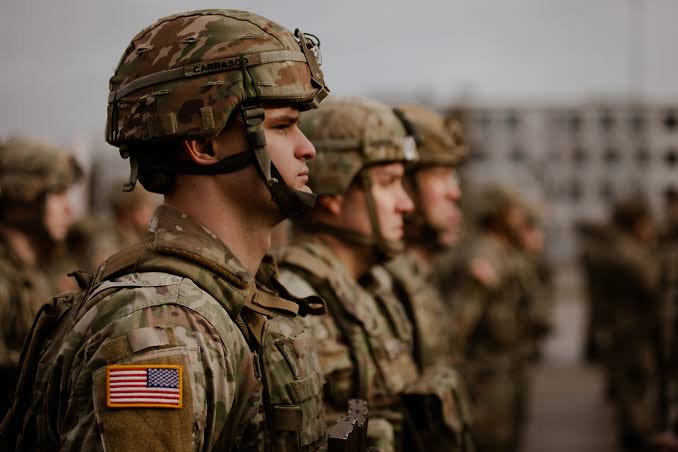
The troops were sent to Washington as the centerpiece of Trump’s campaign to improve public safety in the nation’s capital. Soldiers in camouflage and body armor can regularly be seen patrolling tourist areas, subway stations, national monuments and neighborhoods around the city’s baseball stadium.
But Reuters’ examination of publicly available criminal court records found little evidence that the deployment has significantly affected serious crime.
Soldiers often respond to minor offences
Reuters identified 217 criminal cases in which police reports mentioned National Guard involvement.
In 62 of those cases, soldiers themselves stopped people suspected of crimes. In another 43 cases, they assisted police officers in making arrests.
Many of the incidents, however, involved relatively minor offences.
In one case, soldiers chased a man who allegedly took two slices of pizza and offered $2 as partial payment. In another, troops detained a man accused of stealing two packets of beef jerky worth about $7 from a pharmacy.
Soldiers have also detained people accused of throwing objects at buses, drinking merchandise without paying and jumping subway turnstiles.
The court records also identified 35 cases in which National Guard troops witnessed crimes but did not themselves make arrests, sometimes waiting for police officers to arrive.
The troops have been deputized as U.S. Marshals but have limited law-enforcement powers. Their role has largely been described by the Defense Department as “presence patrols” intended to deter crime through a visible show of force.
Troops concentrated in safer areas
The Reuters investigation also found that the soldiers were more frequently involved in incidents in wealthier, predominantly white and less dangerous parts of Washington.
Reuters found no reference in the court records it reviewed to National Guard soldiers carrying out law-enforcement activity in the neighborhoods where approximately 82% of the city’s 859 murders over the past five years occurred.
Salim Adofo, an outreach coordinator with the Anacostia Coordinating Council, said he had barely seen the troops in the lower-income area where his organization operates.
“I haven’t seen them all year,” he said.
The Rev. Norman Nixon, pastor of Union Temple Baptist Church, similarly criticized the deployment, saying soldiers were sometimes more involved in confronting residents than in traditional police work.
Deployment costs millions
The military presence has also come at a significant financial cost.
The Trump administration previously told Congress that deploying National Guard troops to Washington cost approximately $1.65 million per day. The number of troops was later doubled, increasing the expense.
The administration has indicated that it intends to maintain the deployment through the end of Trump’s presidency in 2029, at an estimated total cost of about $1.4 billion.
The scale of the spending has prompted questions over whether the money would be better spent strengthening the city’s police force.
Washington’s most recent police budget was approximately $1.5 million per day, according to Reuters.
Crime has fallen, but the cause is unclear
Crime statistics provide a more complicated picture.
The number of murders in Washington has fallen for the third consecutive year. However, homicide rates have also declined in cities where the federal government did not deploy National Guard troops or large numbers of additional federal agents.
Meanwhile, violent crime in Washington — including serious assaults, robberies and sexual offences in addition to homicide — was marginally higher than the previous year, rising by about 4% between January and mid-August, according to the Reuters report.
A May study by the nonpartisan Niskanen Center found that the deployment was associated with a reduction in stolen vehicles but found no significant impact on violent crime.
The White House nevertheless defended Trump’s strategy.
Spokeswoman Lauren Bis said the president’s efforts had “driven down crime, beautified the city, and improved quality of life for countless individuals.”
Some soldiers have become crime victims
The deployment has not been without risks for the troops themselves.
Reuters identified 62 cases in which people were charged with pushing, punching or threatening National Guard soldiers. Nine people were accused of spitting on troops.
In one incident, a man allegedly attempted to grab a soldier’s pistol while the soldier was arresting him over the alleged theft of baseball caps at a subway station.
Two soldiers were also shot near the White House last year. One of them died.
There have also been incidents involving off-duty soldiers and local firearms laws, although prosecutors later dropped charges against two soldiers arrested in separate cases.
A deadly incident raises further questions
The limits of the troops’ role came into sharp focus in April after soldiers found Keon Jones unresponsive following a fight near a busy waterfront area.
The soldiers called emergency services but initially believed Jones was intoxicated. Police later discovered that he had suffered a severe stabbing injury. He died in hospital about two hours later.
His aunt, Evelyn Jones, questioned whether more could have been done.
“They could have done more to help him,” she said.
Debate over military presence continues
Trump has portrayed the deployment as part of a broader effort to restore safety and order in American cities. His administration has also authorized smaller National Guard deployments in Memphis and New Orleans and has discussed sending troops to other cities.
But retired National Guard Gen. Randy Manner said using soldiers for routine policing was inappropriate because troops are not trained primarily for everyday police work and can be more expensive than hiring additional officers.
Critics argue that the highly visible military presence can create fear rather than reassurance.
The Rev. William Young, a resident of Washington’s Navy Yard neighborhood, said the soldiers’ presence did not make him feel safer.
“It’s a way of keeping fear in all of us,” he said.
For the Trump administration, the National Guard deployment remains a highly visible symbol of its tough approach to crime. But the Reuters review suggests that, despite the thousands of troops on Washington’s streets, their direct involvement in serious criminal cases has remained relatively small.
Source: Reuters